DESCRIPTION
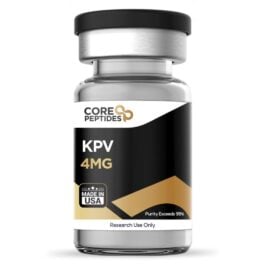
KPV Peptide
Alpha melanocyte-stimulating hormone (a-MSH) is also classified as a melanotropin. a-MSH is an endogenous peptide hormone, composed of 13 amino acids, and considered to play a role in metabolic function, as well as other biological processes. Scientists isolated a fragment of this protein hormone and identified its potential biological action, naming it KPV peptide. KPV comprises three amino acids: Lysine, Proline, and Valine.(1) This peptide is a C-terminal fragment of the a-MSH protein hormone, which is considered the primary amino acid sequence in the hormone responsible for its properties.(2)
A study(2) was published in 1989 explaining how the tripeptide was isolated and its biological potential determined. Upon discovering that the COOH terminal peptide in the a-MSH hormone is the primary amino acid messenger sequence, scientists conducted preliminary research to determine if KPV might prevent an excessive increase in vasopermeability and excessive swelling of blood vessels. As a part of the study, scientists isolated the KPV peptide and presented it to experimental mice to determine its potential to mitigate swelling in their ears. After the completion of the study, the researchers reported that the isolated fragment appeared to have inhibited the swelling. KPV’s potential anti-inflammatory action may be induced by inactivating the inflammatory pathways.(3) It may also possibly inhibit the synthesis and release of the pro-inflammatory cytokine cells in intestinal and immune cells.
Chemical Makeup
Molecular Formula: C16H30N4O4
Molecular Weight: 342.43 g/mol
Other Known Titles: MSH (11-13), ACTH(11-13), alpha-MSH(11-13)
Research and Clinical Studies
KPV Peptide and Intestinal Protection
A study(4) was conducted on murine models to determine the peptide’s potential on intestinal inflammation. The experiment was conducted on mice induced with bowel dysfunction. These mice were divided into two groups: one group was given the peptide, and the other was given the placebo. After the study, researchers reported that the peptide mice exhibited reduced inflammatory cells and anti-enzymatic symptoms.
Another study(4) was conducted on a murine model of inflamed intestines, which involved the exposure of a chemical-induced compound of KPV and a chemical called hyaluronic acid. This chemical-induced KPV compound was given to the mice, with the added hyaluronic acid supplementation, intended to aid targeted delivery of the peptide to specific locations in the intestine. The results observed mitigated swelling in the intestine.
KPV Peptide and Intestinal Cells
One study(5) was conducted on a cell culture of inflamed intestinal cells. The main purpose of this study was to determine the peptide’s potential against inflammation. Inflamed intestinal cells were isolated and exposed to either the KPV peptide or a placebo. Upon exposure to the peptide, these cells were examined, and results indicated that even nanomolar concentrations of the peptide appeared to have led to anti-inflammatory results. The researchers suggested that the KPV peptide appeared to mainly act via PepT1 expression in these intestinal cells, suggesting that PepT1 may play a role in transporting the peptide to the site of inflammation.
Another study delved into the potential of KPV in addressing ulcerative inflammation of the colonic mucosa cells.(6) The researchers hypothesized that KPV might mitigate inflammatory responses within colonic cells, by accelerating mucosal healing and alleviating inflammation of the colonic mucosa. The action mechanism was suggested to involve the targeted delivery of KPV to inflamed colonic tissues, where it may exert anti-inflammatory potential. The researchers found that KPV may have exhibited a capacity to protect mucosal surfaces and downregulate TNF-α, a key marker of inflammation.
Further trials in two murine models of intestinal inflammation suggest that KPV may have led to significant improvements, including earlier recovery, significant regain of body weight, and a reduction in inflammatory infiltrates, in the colonic tissue.(7) These outcomes were further supported by a notable decrease in myeloperoxidase (MPO) activity, indicating reduced neutrophil accumulation and inflammation in colonic tissue following KPV exposure. Moreover, the study explored whether KPV’s anti-inflammatory actions may have been linked to the melanocortin-1 receptor (MC1R), suggesting that the action of KPV might at least be partially independent of MC1R signaling.
One 1984 study aimed to evaluate the potential antipyretic action of the peptide,(8) wherein rabbits were given KPV peptide to examine its potential action on the nervous system. Following the study, researchers suggested that the peptide exhibited antipyretic potential, reducing the rabbits’ body temperature to optimal levels.

| Vial Size | 4MG, 10MG |
|---|
Be the first to review “KPV (4mg)”
Related products
Peptides

Peptides

Peptides
Peptides
Peptides

Peptides
Peptides

Peptides
Reviews
There are no reviews yet.